Is AI-Generated Code Copyrightable at All?
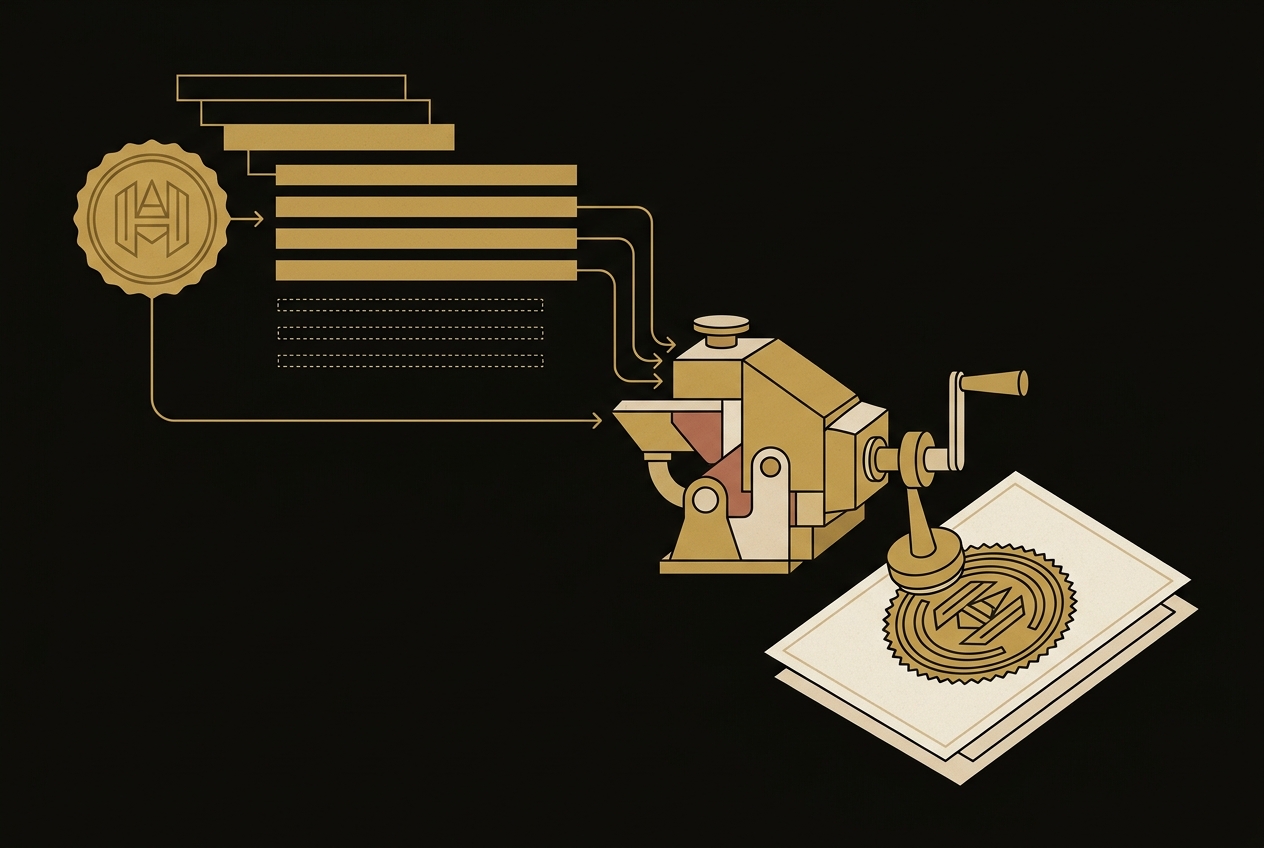
The Copyright Office won't protect your AI-generated code because they don't see a human hand in the work. You can spend weeks prompting a model to build an entire application, but if you didn't touch the syntax, the law views that code as a public domain orphan. This sounds harsh. It is. But if you want to protect your intellectual property, you need to understand where the Office draws the line between a tool and an author.
The Human Authorship Requirement
The core rule is simple: copyright requires human authorship. This isn't a new concept invented for the AI era. It's the bedrock of the entire system. In the case of Thaler v. Perlmutter, a federal judge confirmed that human creativity is a requirement for a valid copyright registration. The Copyright Office hasn't budged on this. If you don't have a human author, you don't have a copyright.
Think of your IDE as a paintbrush. When you use a brush, the painting belongs to you because you controlled every stroke. When you use a generative model, the Office fears the model is the one holding the brush. They look at the output and ask who made the creative decisions. If the AI made the choices about structure, logic, and implementation, the Office views your role as a mere prompter. You're a user, not a creator.
The Zarya Precedent
Look at the Zarya of the Dawn case for the best roadmap we have. The Copyright Office granted protection to the text and the arrangement of a comic book, but they denied it for the individual images generated by Midjourney. They reasoned that the human didn't have enough control over the specific output to claim authorship.
Apply this to your repository. If you dump a prompt into a chat interface and copy the resulting function, you've created something that the law likely treats as unprotectable. It's the digital equivalent of finding a rock on the ground and trying to claim you sculpted it. You might have found it, and you might be using it, but you didn't create the features that make it valuable.
Protecting Your Architecture
You aren't doomed. The Office does protect human-authored logic. If you write your own classes, define your own interfaces, and stitch together AI-generated snippets into a cohesive architecture, you have a claim. The copyrightable ai written software isn't the machine-generated block. It's the way you selected, coordinated, and arranged those blocks.
This is where your documentation matters. You need to treat your repo like a paper trail. If you rely on AI for boilerplate, document your human-written logic. Keep records of your commit history that show your edits. The goal is to show the Office that the AI was a helper, not the architect. You're the one deciding the flow of data. You're the one handling the edge cases. You're the one fixing the hallucinations the model introduced.
The Cost of Compliance
Registering your code costs about $65 for a standard claim. That's a small price to pay for the ability to sue for infringement. If someone steals your code, you can't go after them for statutory damages, which can reach $30,000 per work, unless your registration is on file. Those damages are the teeth of copyright law. Without a registration, you're limited to proving actual damages, which are often expensive and difficult to quantify in court.
There's a 3-month window after publication where you need to get your registration in to secure the full range of statutory remedies. Don't wait until someone scrapes your repo to start thinking about this. If you wait until a dispute happens, it's already too late. The Office won't let you retroactively claim authorship for code you let a machine spit out without human intervention.
Defining the Line
Where does the line fall? It falls at the point of meaningful human control. If you write a prompt that says "write me a login function," and you copy that code without changing a character, you've likely lost your copyright claim on that file. If you write the login logic yourself, and use the AI only to optimize a single loop or suggest a library, you're on safer ground.
The Office is currently reviewing its guidance for AI works, but their stance remains rigid. They want to see the human contribution. You should write your code with the assumption that you need to prove your own work. This means commenting your code to explain your logic. It means keeping your original drafts and your iterative changes. If a project is entirely AI-written, accept that it's in the public domain and focus your efforts on the parts of your stack that you built from scratch.
The Reality of Enforcement
Copyright law is slow. It takes time to move through the system, and the current precedents are still being tested in the courts. You won't find a silver bullet that turns AI output into protected property overnight. The law is designed to protect human effort, not machine efficiency. If you want to build a business on your code, you have to prioritize the code that you can claim as your own.
Stop treating your codebase as a black box. If you outsource the heavy lifting to an AI, you're outsourcing your legal protection. Use AI to speed up your work, but ensure the architecture, the selection, and the final implementation remain firmly under your control. The human element is the only thing that separates your work from a generic output that anyone can copy without consequence.
Check your current filing status against the latest updates at copyright.gov to ensure you're within the legal bounds for your specific project. Protect the logic you built yourself by reading our methodology on documenting human contribution, then install our Copyrightable hook to track your creative edits in real time.
Related reading
- AI Copyright for Developers: Is Your AI-Generated Code Yours?
- Do You Own the Code Cursor Writes For You?
- What a Git History Does and Does Not Prove
- Every AI Copyright Lawsuit Worth Knowing: The Complete Guide
Want the record behind your own work? See how the methodology scores authorship.
Want a contemporaneous record of how you authored your work?
Try it free