A Single Piece of American Cheese: The First Clear Yes
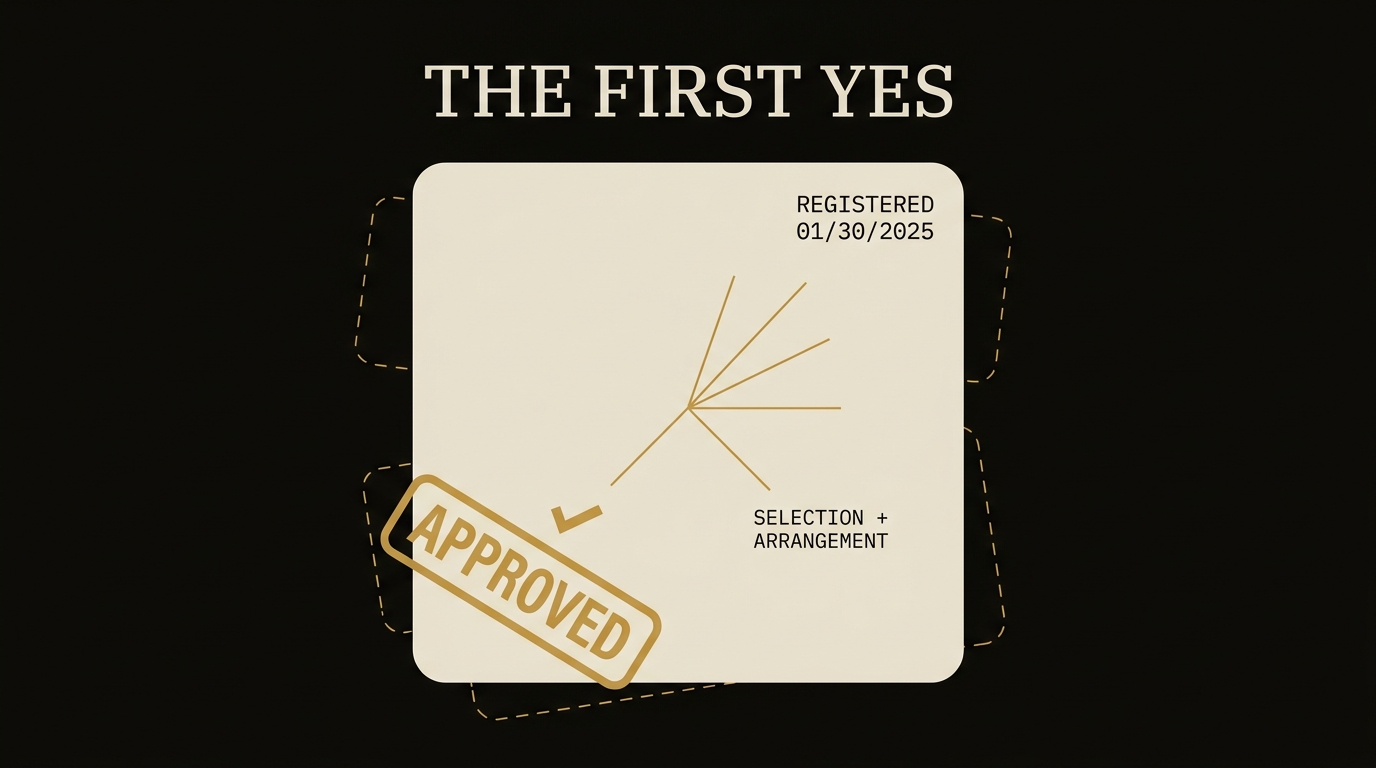
After Zarya, after Theatre D'opera Spatial, after years of refusals making headlines, people assumed the Copyright Office had effectively closed the door on AI-made images. Then on January 30, 2025, it registered one.
The work is called A Single Piece of American Cheese. The studio Invoke made it with their own inpainting tools, the kind that let you paint a mask over a region and have the model fill that region according to your direction, region by region, pass after pass. It's a heavily AI-involved image by any honest description. And it got a registration certificate, the accepted-side bookend to every rejection that came before.
If you only study the losses, you learn what fails. This case shows you what works.
Why the Office said yes
The registration didn't cover the AI-generated pixels as such. Invoke disclaimed those, the same disclaimer step Jason Allen refused to make. What the Office protected was the human authorship in the "selection, coordination, and arrangement" of the AI-generated material.
Those are the exact words from the Zarya letter, now appearing on the winning side. Invoke's creator didn't type one prompt and accept whatever came out. He worked the image in pieces, choosing which regions to regenerate, deciding what went where, arranging the generated material into a composition he controlled, and modifying it through repeated targeted passes. The Office looked at that and found a human had determined enough of the expressive result to support a claim. The AI material got disclaimed. The human selection and arrangement carried the registration.
Invoke helped its own case by documenting the process, including a record of how the image was built region by region. That documentation mattered. It let the Office see the human decisions instead of guessing at them.
The rule this confirms
The cheese case isn't an exception or a loophole. It's a clean application of the rule the Office has stated repeatedly, most fully in its March 2023 guidance and its January 2025 Part 2 report on copyrightability.
The rule, in one sentence: an AI-assisted work is registrable to the extent a human determined its expressive elements through selection, arrangement, or meaningful modification.
Read against that rule, every case in this saga snaps into place. Thaler failed because no human determined anything. Allen failed because he wouldn't disclaim the AI material and isolate his human contribution. Zarya split because the text and arrangement were human-determined but the raw images were not. And the cheese succeeded because the human selection, arrangement, and modification were real, identifiable, and properly disclaimed around the AI-generated parts.
Same rule, four different outcomes, depending entirely on how much expressive control the human exercised and whether they could show it.
What "enough" looks like in practice
Notice what the Office cared about, and what it didn't.
It didn't count prompts. It didn't measure hours. It didn't ask whether the tool was Midjourney or Invoke or anything else. It asked a single question: did a human make enough expressive decisions about this specific work that the result reflects their authorship, not just the machine's? For the cheese, the answer was yes, because the creator's choices about regions, placement, composition, and successive modification shaped what the final image expressed.
This is good news if you make things with AI and a warning if you're careless about it. The door is open. The Office will register your AI-assisted work. But it will register it to the extent of your human authorship, which means you have to have some, and you have to be able to point to it. Disclaim the generated material. Claim the selection, the arrangement, the modifications. Show your work.
That last part is where most people fall down. Invoke could document its process because it captured the build as it happened, region by region. Most creators don't. They finish the piece, then try to reconstruct months later which choices were theirs, and a reconstruction made for a copyright fight is exactly the kind of thing that invites doubt.
The bookend that closes the loop
A Single Piece of American Cheese tells you the destination. A human-authored selection and arrangement of AI-generated material, with the generated parts disclaimed, is registrable. That's not theory. There's a certificate.
The gap between that destination and most people's reality is the record. The Office protected the cheese because Invoke could show the human decisions. Your AI-assisted work has the same potential and the same requirement.
Copyrightable records the selection, arrangement, and modification decisions the Office actually asks about, as you make them. Install the hook and your next AI-assisted work carries that record from the first prompt, so when you file, you're handing the Office the same kind of evidence that earned the first clear yes, not a story you assembled after the fact. Read the Copyright Office's Part 2 copyrightability report and the Harvard JSEL writeup of the registration, then start your record before you need it.
Related reading
- Every AI Copyright Lawsuit Worth Knowing: The Complete Guide
- Zarya of the Dawn: What the Copyright Office Actually Kept
- Theatre D'opera Spatial: 624 Prompts Weren't Enough
Want the record behind your own work? See how the methodology scores authorship.
Want a contemporaneous record of how you authored your work?
Try it free